
#StartingANewChapter

What makes a Patriot Pour truly work isn’t the topic or the turnout—it’s the culture in the room. When people feel comfortable enough to speak, listen, and be known, something powerful begins to take shape. This article explores how facilitators can quietly guide the conversation, protect the space, and create a room where real connection happens week after week.

A packed room can feel like success—but at Patriot Pour, connection matters more than attendance. As groups grow past 20, participation drops and real conversations fade. If we’re serious about building relationships that save lives, we have to rethink what a “successful” meeting really looks like.
The culture of The Veterans Club isn’t built through programs or speeches. It grows around coffee tables, laughter, and shared stories. For facilitators, protecting that culture is the mission. By guiding conversation, inviting quieter voices in, and keeping the room focused on connection, facilitators help turn simple weekly coffee meetings into the foundation of real relationships.
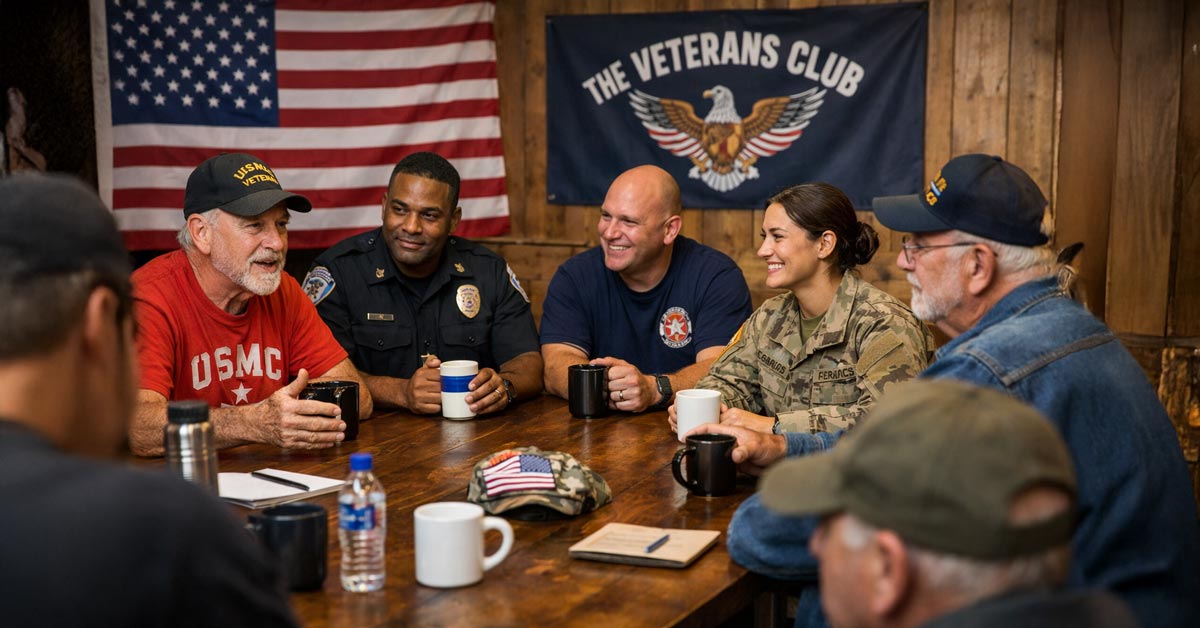
What makes The Veterans Club different? It isn’t politics, programming, or prestige. It’s consistency. A weekly table. Coffee. Structured conversation. Combat and non-combat veterans. Police, fire, EMT, DOD — equally valued. Not therapy. Not hierarchy. Just belonging. In a divided world, we protect something rare: steady, face-to-face connection built on shared service.
When a Patriot Pour conversation starts to feel flat, the answer isn’t a new topic—it’s a story. The Veterans Club works because it gives veterans and first responders space for honest conversation about service to God, Country, and Community. When in doubt, invite someone to share their time in uniform. Stories build trust—and save lives.
Guest speakers can add value to weekly meetings—but only when they support the mission and respect the structure. This guide helps facilitators screen speakers, maintain control of the room, protect meeting flow, and ensure members leave feeling better than when they arrived. Leadership means setting boundaries and holding the standard.
Effective facilitation means helping every voice in the room be heard. Not everyone is naturally comfortable speaking, so facilitators use gentle prompts, active listening, and personal connection to encourage full participation. When every member contributes, relationships deepen and community grows.
Great facilitators don’t tell members what to say—they encourage them to say it. This article highlights how guiding discussion flow, choosing meaningful topics, and featuring member stories create connection and ensure members leave each meeting feeling lighter, supported, and happier than when they arrived.
Suicide prevention at The Veterans Club begins with the facilitator. Every meeting is an opportunity to lift spirits, build connection, and remind members that life is worth living. This article explores how setting a positive tone — where people leave happier than they arrived — becomes the foundation of true suicide prevention.